
 843-737-2597
Quick Quote
Few things are guaranteed in life, but there is one thing that you can count on for sure: as time goes on, your body is going to age. While most men in their late teens through their twenties might feel invincible, it's only a matter of time before age starts to play a role in everyday life. Injuries take longer to recover from, hangovers take longer to dissipate, aches and pains become a normal part of life, and intimate time with your partner can be compromised. If you have experienced any of the symptoms above, don't worry - it's completely normal to slow down as you get older.
The question is, what are you going to do about the aging process? For years, men were told to just "live with it". The time to fight back is here, and there has never been a better opportunity to live your best life than now. Nobody understands the effects that aging can have on men but our team of professionals at Better Life do. That is why we invest all of our time developing innovative, effective men's health solutions: to give men a chance to change their future and live like they did while they were in their prime. If you're ready to take a stand against ED and live a more energetic, youthful life, know that you're not alone. At Better Life Carolinas, we are here to help by providing the most scientifically advanced treatments on the market today.
Service Areas
GAINSWave® Treatment In Sullivan's Island, SC
When it comes to men's health, the topic of sex can still feel taboo, especially when there are performance issues involved. At Better Life Carolinas, we have heard just about every story you can imagine regarding erectile dysfunction or ED. So if you're embarrassed and angry about your performance in the bedroom, we understand how you're feeling. In the past, men had to take strange drugs or sign off on expensive surgeries to help correct their ED, adding to their feelings of shame and hopelessness.
The good news? If you're a man dealing with ED, you don't have to settle for antiquated treatments like those referenced above. There's a new product on the block: a revolutionary, non-invasive treatment that is the first of it's kind. It's called GAINSWave®, and you can bet your bottom dollar that it isn't like anything else you have tried before.
Unlike most ED treatments, this unique approach does not require drugs or surgery. Instead, it relies on high-frequency acoustic waves to open the penis's existing blood vessels, encouraging the growth of new blood vessels while eliminating micro-plaque. To put it simply, GAINSWave® increases blood flow and gives you a chance to reclaim your libido and live life like a man in his prime.
GAINSWave® isn't a sketchy, quick-fix pill found behind the glass at a gas station. It is a comprehensive erectile dysfunction treatment with an incredible 76% success rate. With virtually no side effects, it's no wonder that men throughout the Carolinas and across the United States trust GAINSWave® to solve their ED and Peyronie's disease problems.
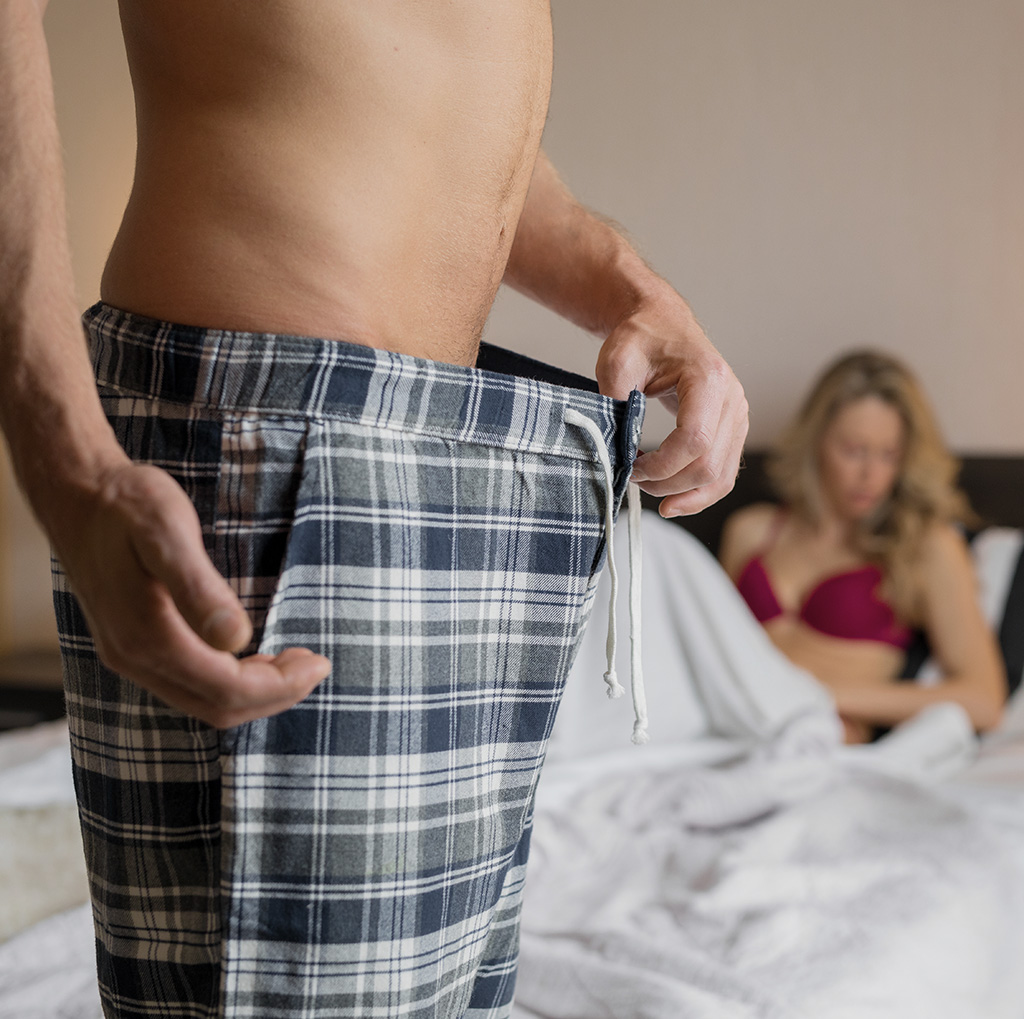

How GAINSWave® Works
It might sound like GAINSWave® is too good to be true, but the fact is this kind of erectile dysfunction treatment in Sullivan's Island, SC uses scientifically-backed, time-tested technologies and applications to improve male sexual performance. Technically referred to as Low-Intensity Extracorporeal Shockwave Therapy (LI-ESWT), our GAINSWave® procedure goes right to the crux of the issue. Low-intensity sound waves break up plaque formation in your penis while stimulating new blood vessel growth. These new blood vessels help get more blood to your penis, ultimately improving your ability to perform. This incredible treatment not only increases blood flow - it also causes new nerve tissues to grow, making your penis more sensitive and easily stimulated.
It all happens through a process called neurogenesis, which increases penis sensitivity. What sets GAINSWave® apart from others is the use of low-intensity sound waves to achieve increased blood flow and sensitivity. Because this procedure is completely non-invasive, you won't ever have to worry about expensive insurance claims or unsightly scarring. All you have to worry about is enjoying life like you used to, without having to undergo surgery or putting harmful substances in your body.
Here are some quick facts about Better Life Carolinas GAINSWave® treatments:
- For most men, you can expect to have between 6 and 12 GAINSWave® sessions
- Sessions typically take 15 to 20 minutes.
- GAINSWave® works by releasing growth factors in your penis tissue, which generates new blood vessels.
- GAINSWave® promotes healthy blood flow by breaking up plaque formation, giving men harder, stronger erections for longer periods of time.
- GAINSWave® also activates dormant stem cells, which leads to new cell growth in men.
Hidden Risks of Prescription Erectile Dysfunction Treatment
If you have ever wondered why GAINSWave® treatments are so popular with men, the answer is simple. Prescription drugs meant to help ED often come with side effects that can diminish your peace of mind and day-to-day life. While some men swear by the "little blue pill," many guys aren't aware of the hidden risks associated with drugs like Viagra. The following ailments can happen both in the short term and long term:
- Back Pain
- Muscle Pain
- Headaches
- Vision Loss
- Rashes
- Respiratory Issues
- Hearing Loss
- Dizziness
- Upset Stomach
- Ringing in Ears
- Fever

If you are having problems with erectile dysfunction, you should understand why it's happening. The primary cause of ED is associated with a lack of blood flow to the penis, making erections difficult to get and maintain. Rather than relying on a prescription pill for a quick fix, many men are using GAINSWave® treatment in Sullivan's Island, SC for a natural solution with no ill side effects. ED doesn't have to be your "new normal," and neither does suffering from strange side effects from popping too many "little blue pills."
GAINSWave®, COVID-19, and ED
The global COVID-19 pandemic has had a profound effect on the world. Over the last year, millions of Americans have had to change their lifestyles and alter daily routines to better protect themselves and their loved ones from the virus. While COVID-19 causes a litany of negative side effects, new research shows that men who contract the virus can triple their risk of developing erectile dysfunction. Because the human body is unfamiliar with this kind of virus, it responds by sending a large immune response. During this process, the body uses massive amounts of chemicals to eliminate the virus, causing horrible collateral damage in the form of cell destruction and inflammation.

Contracting COVID-19 and suffering from ED at the same time might sound like a death sentence. However, if you are a man experiencing ED during or after contracting the COVID-19 virus, don't lose hope.
Clinical trials have shown that shockwave therapy, better known as GAINSWave®, has been shown to lower inflammation and boost vascularity by creating angiogenesis and improving endothelial function. Simply put, GAINSWave® treatments can help reverse symptoms of ED brought on by COVID-19. To learn more about how GAINSWave® can help you get back to a normal sex life after developing COVID-19, we recommend contacting our office today.
GAINSWave®: A Natural, Non-Invasive Treatment for Peyronie's Disease
Though Peyronie's Disease affects about 9% of men, it is a little-known disease that can cause physical and aesthetic issues. It is characterized by fibrous scar tissue, which forms underneath the surface of a man's penis. When this disease is left untreated or treated improperly, it can be very difficult for men to have a normal erection. This is because Peyronie's Disease can cause painful curvatures in the penis, making it nearly impossible for afflicted men to have sexual intercourse at all.
The cause of Peyronie's Disease is currently unknown. However, most cases stem from physical trauma like acute injuries after vigorous sex. Other causes include prostate surgery, autoimmune disorders, and family history. Unfortunately, traditional treatment options range from a "wait and see" approach to prescription drugs and even surgery.
Symptoms and signs of Peyronie's Disease include:
- Erectile Dysfunction: Men with this disease may have problems achieving or maintaining erections.
- Misshapen Penis: Some men with this disease suffer from a narrowing of the penis when erect, resembling an hourglass shape.
- Notable Bend in Penis: One of the most common symptoms of Peyronie's Disease includes significant penis curvature, which is defined by a severe and unnatural bend.
- Scar Tissue: A common symptom of this disease is bands of tissue or hard lumps underneath the skin of the penis.
- Shortened Penis: Some men with this disease have reported a reduction in penis length.
- Pain in Penis: Peyronie's has the potential to cause pain in a man's penis, regardless of whether he has an erection or not.

Fortunately, for men who are looking for a non-invasive, natural erectile dysfunction treatment in Sullivan's Island, SC GAINSWave® is the answer. Using low-strength soundwaves or shockwaves, GAINSWave® treatment in Sullivan's Island breaks down scar tissue affecting your penis, helps create new blood vessels, and opens up existing ones. As a result, blood flow is increased, which minimizes penis curvature and fixes the problems associated with erectile dysfunction.
P-Shot® Erectile Dysfunction Treatment in Sullivan's Island, SC
Most guys will tell you that their penis is the most important part of their body. While that is not totally true from a physiological perspective, we get where they're coming from - after all, a man's penis plays a big role in his personal life and overall wellbeing. When a man has problems achieving and maintaining an erection, his quality of life can suffer dramatically, resulting in lower self-esteem and even depression. If you are a man and suffering from ED or Peyronie's Disease, you can rest easy knowing help is only a phone call away.
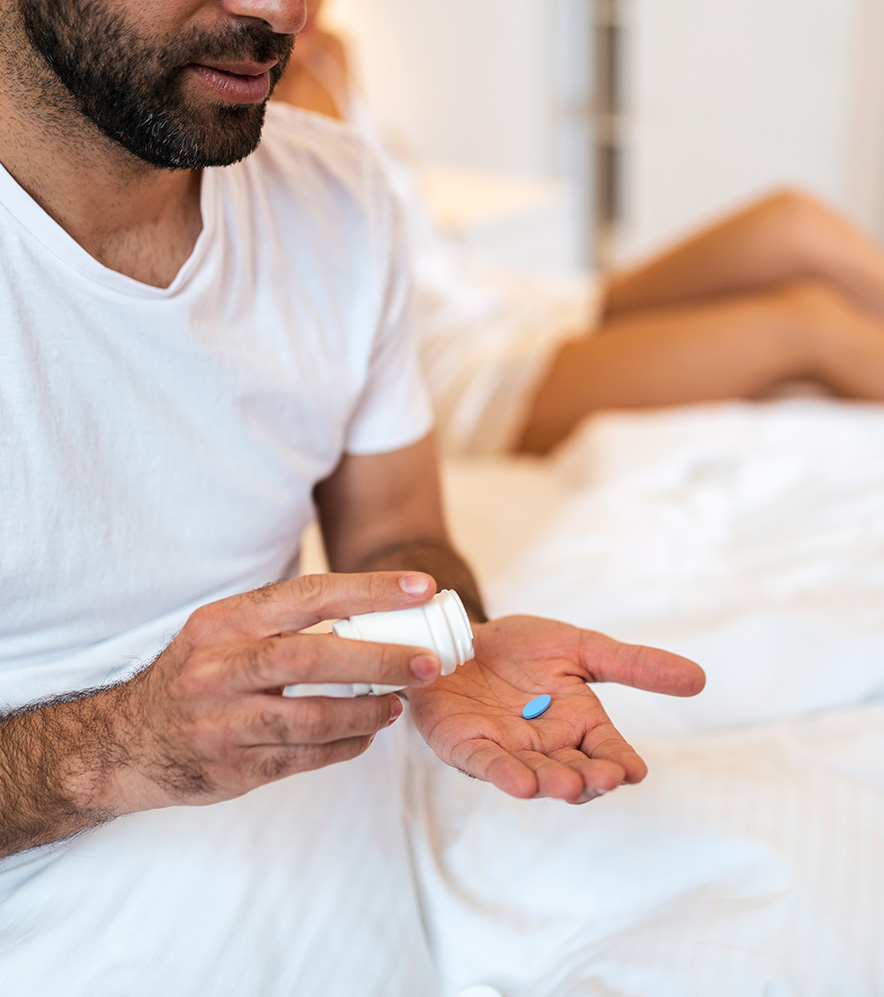
In addition to GAINSWave® treatments, Better Life Carolinas also offers the Priapus Shot or P-Shot® for short. Originally used to treat wounds and sports injuries, our P-Shot® is an all-natural treatment that fortifies your body through cellular repair and rejuvenation. P-Shot® treatments have shown very promising results for men who have suffered from prostate cancer, enlarged prostates, the side effects of surgery, drug side effects from prescription pain killers, and even diabetes.
You might be asking yourself, "How does the P-Shot® work?"
This ED solution works by using platelet-rich plasma or PRP from your own body. The proteins and growth factors released by the large number of platelets activate your stem cells, which begins cellular regeneration and repair wherever the PRP are used in your body. Tissue repair in your penis is further aided by the formation of new blood vessels and collagen production.
In many cases, men who use the P-Shot® to correct erectile dysfunction or the effects of Peyronie's Disease can resume sexual activity a few hours after the treatment is applied.
Benefits of Better Life Carolinas' P-Shot® include:
- Increased blood flow to the penis
- Improved stamina during sexual activities
- Improvement and possible resolution of penile curvature issues caused by Peyronie's Disease
- Increased penis sensitivity
- Improvements to penis girth and length
For more information about the Priapus Shot or to find out if this treatment is right for you, schedule your free consultation today.
Contact UsLatest News in Sullivan's Island, SC
Sullivan’s Island residents concerned over water debt, shutoff threat
Destiny Kennedyhttps://www.live5news.com/2024/04/06/sullivans-island-residents-concerned-over-water-debt-shutoff-threat/
SULLIVAN’S ISLAND, S.C. (WCSC) - Residents of Sullivan’s Island could be just months away from losing their primary source of water if the town doesn’t resolve a billing dispute.At the focus of the years-long battle between Sullivan’s Island and the Charleston Water System is nearly $640,000 the water utility claims the town owes. The Charleston Water System has said it will cut off the town’s access if the bill isn’t paid by July 20.The threat is leaving residents like William Wright feeling...
SULLIVAN’S ISLAND, S.C. (WCSC) - Residents of Sullivan’s Island could be just months away from losing their primary source of water if the town doesn’t resolve a billing dispute.
At the focus of the years-long battle between Sullivan’s Island and the Charleston Water System is nearly $640,000 the water utility claims the town owes. The Charleston Water System has said it will cut off the town’s access if the bill isn’t paid by July 20.
The threat is leaving residents like William Wright feeling like they’re stuck in the middle over a problem that isn’t their fault.
“I mean, you got like kids and other people that don’t have no say so in the money due that’s going to be out of water and everything. So, I don’t think that’s fair,” Wright said.
Charleston Water claims Sullivan’s Island changed how much they paid for water in 2017 and has accumulated unpaid volumetric and capital charges.
If Sullivan’s Island doesn’t pay all outstanding balances, the utility says the island will have to find an alternate water source.
The town of Sullivan’s Island disagrees on who should pay for certain expenses and refuses to pay.
Resident Curt Moore is hoping for the best.
“From what I understand there was a breach of contract there somehow. You can’t shut off Sullivan’s Island from water. And if there is a problem, I think there is a solution for it,” Moore said.
The town released a statement in which it claimed the Charleston Water System wants the town to ignore the terms of the signed agreement they entered into almost 30 years ago. The town says it is hard for them to accept what it called a “baseless claim” from Charleston Water that the town is being subsidized when Sullivan’s Island paid almost $2 million in 1994 to support the infrastructure and gifted Charleston Water an easement through public parks and playgrounds. That easement, the town claims, allowed Charleston Water to sell water to neighbors on the Isle of Palms and in Mount Pleasant.
Charleston Water plans to send out delinquent notices to state agencies and the town warning that the water will be shut off starting July 20, when the contract is up.
Copyright 2024 WCSC. All rights reserved.
Charleston Water System responds to Sullivan’s Island Council decision amid contract dispute
Jordan Cioppahttps://www.counton2.com/news/charleston-water-system-responds-to-sullivans-island-council-decision-amid-contract-dispute/
SULLIVAN’S ISLAND, S.C. (WCBD) – The future of water service on Sullivan’s Island remains uncertain amid a contractual dispute between the town and Charleston Water System.“The island has the ability to generate taxes and they need to figure it out because what they did in 2017 was, they just quit paying,” said Sullivan’s Island resident, Dave Spurgin.A 30-year water supply contract between CWS and the Town of Sullivan’s Island went into effect on July 19, 1994.Based on letters p...
SULLIVAN’S ISLAND, S.C. (WCBD) – The future of water service on Sullivan’s Island remains uncertain amid a contractual dispute between the town and Charleston Water System.
“The island has the ability to generate taxes and they need to figure it out because what they did in 2017 was, they just quit paying,” said Sullivan’s Island resident, Dave Spurgin.
A 30-year water supply contract between CWS and the Town of Sullivan’s Island went into effect on July 19, 1994.
Based on letters provided by CWS, there has been a disagreement over the rates since 2017. The water system claims the town owes them $1,078,000 as of last month.
“Years ago, Charleston Water System decided to raise our rates as if our signed contract did not exist. The town disputed that rate increase and has continued to pay the undisputed amount owed in accordance with our longstanding signed agreement,” said Sullivan’s Island Town Councilman Justin Novak on Monday night during a special council meeting.
The statement was part of a longer motion read aloud before council voted to pay $227,361 to satisfy the disputed portion of the amount owed. Island leaders said the amount was calculated by a nationally recognized rate consultant.
CWS CEO Mark Cline released the following statement to News 2 on Tuesday.
“Charleston Water System does not agree with the Town of Sullivan’s Island’s viewpoint or its recollection of the historical facts. We fully intend to discontinue the Town’s water service July 20 unless their past due amount is fully paid and they have entered into a new contract that appropriately covers the costs of providing water service to their community. It’s not fair that our other customers have been subsidizing the Town’s service for years now, and that would continue under their terms.”
Spurgin, who has lived on Sullivan’s Island for nearly 30 years, said he is not concerned about the potential water shut-off.
“No, because we’re going to need our water. They’re not going to shut the water off. The town’s going to have to figure out, the town council is going to have to figure out how to come up with the money,” Spurgin told News 2.
Sullivan’s Island Mayor Pat O’Neil released the following statement.
“Apparently CWS is having very-late-onset buyer’s remorse about a legally binding contract they willingly entered into almost 30 years ago. When we entered into this agreement in the aftermath of Hurricane Hugo, the Island was at one of its most vulnerable points in its centuries-long history. Nonetheless we have abided by the language of this contract. It’s hard to accept that CWS (or anyone else) is “subsidizing” SI when we paid almost $2 million (in 1994 dollars) to support the infrastructure that allowed them to sell water to us and to our neighbors on the Isle of Palms, and when in 2020 we gave them an easement through our public park and playground so there would be additional capacity to sell water to our neighbors in Mount Pleasant.”
Historic Sullivan's Island Residence Sells For $9 Million
The Cassina Grouphttps://www.prweb.com/releases/historic-sullivans-island-residence-sells-for-9-million-302097190.html
Jimmy Dye, founding partner and broker-in-charge of The Cassina Group, successfully represented the owners on the sale of 1702 Ion Avenue, a significant transaction for Sullivan's Island. The property, a stunning 5-bedroom, 3.5-bath, 7,344 square foot home, was sold for $9,000,000, marking a notable milestone for the island's real estate market., successfully represented the owners on the sale of 1702 Ion Avenue, a significant transaction for Sullivan's Island. The property, a stunning 5-bedroom, 3.5-bath, 7,344 square foot home, was ...
Jimmy Dye, founding partner and broker-in-charge of The Cassina Group, successfully represented the owners on the sale of 1702 Ion Avenue, a significant transaction for Sullivan's Island. The property, a stunning 5-bedroom, 3.5-bath, 7,344 square foot home, was sold for $9,000,000, marking a notable milestone for the island's real estate market.
, successfully represented the owners on the sale of 1702 Ion Avenue, a significant transaction for Sullivan's Island. The property, a stunning 5-bedroom, 3.5-bath, 7,344 square foot home, was sold for $9,000,000, marking a notable milestone for the island's real estate market.
Originally constructed as the Base Commandant's Quarters, this exquisitely preserved historic home holds a unique place in history as the largest and most elaborate surviving structure of offices at Fort Moultrie. Its significance was further accentuated during World War II when it became the residence of the chief of staff, George C. Marshall.
"I am thrilled to have had the opportunity to represent the sellers on this extraordinary property," said Jimmy Dye. "Its rich history and timeless elegance make it a truly one-of-a-kind home, and I am proud to have been involved in the sale."
The property's distinctive features include expansive wraparound porches, tin printed ceilings, multiple fireplaces, gracious rooms, 9-foot ceilings throughout, a renovated kitchen, and a private pool, among others. Its charm and historical significance were a draw for buyers, leading to the property going under contract a mere 7 days after being listed with Dye.
This sale not only underscores the enduring appeal of Sullivan's Island but also highlights Jimmy Dye's exceptional ability to navigate high-value transactions in the luxury real estate market. The Cassina Group has a dominant presence on Sullivan's Island, closing 2023 as the #1 firm for sales on the island.
For more information on The Cassina Group, please visit TheCassinaGroup.com.
About The Cassina Group
The Cassina Group is a boutique real estate brokerage with offices in Mount Pleasant, SC and Charleston, SC. The firm is managed by founding partners and brokers-in-charge, Jimmy Dye and Robertson Allen, and Owen Tyler, partner and managing broker. Recent awards include top honors from Charleston Magazine, Inc. 5000, T3 Sixty and SC Biz News. For more information, visit TheCassinaGroup.com or call 843-628-0008.
Media Contact
Simon Ashton, SIMS Agency, 1 8433219292, simon@simsagency.com
SOURCE The Cassina Group
Sullivan’s Island agrees to pay $227k amid contract dispute with Charleston Water System
Jordan Cioppahttps://www.counton2.com/news/sullivans-island-agrees-to-pay-227k-amid-contract-dispute-with-charleston-water-system/
SULLIVAN’S ISLAND, S.C. (WCBD) – The Town of Sullivan’s Island has agreed to pay just over $227,000 to Charleston Water System amid a contract dispute.Sullivan’s Island Town Council spent almost an hour in an executive session on Monday night while they received legal advice on contractual negotiations with Charleston Water System.“That signed contract constitutes a valuable asset of the town and provides certainty regarding the rates that our residents pay for water. Years ago, Charleston Water Sy...
SULLIVAN’S ISLAND, S.C. (WCBD) – The Town of Sullivan’s Island has agreed to pay just over $227,000 to Charleston Water System amid a contract dispute.
Sullivan’s Island Town Council spent almost an hour in an executive session on Monday night while they received legal advice on contractual negotiations with Charleston Water System.
“That signed contract constitutes a valuable asset of the town and provides certainty regarding the rates that our residents pay for water. Years ago, Charleston Water System decided to raise our rates as if our signed contract did not exist,” said Town Councilman and Mayor Pro Tem Justin Novak, as he read aloud a lengthy motion upon council’s return to open session.
As News 2 reported last month, Charleston Water System claimed in an October 2023 letter to the town that Sullivan’s Island has been paying less than the correct rate since 2017. A spokesperson for CWS said the town owed $1,078,000 as of the beginning of March.
The letter also said the 30-year contract between CWS, and the town will expire on July 19, 2024 and if there is not a new contract by then, water service will be disconnected for the town’s 2,000 on July 20th.
“The town disputed that rate increase and continued to pay the undisputed amount owed in accordance with our longstanding signed agreement and placed the disputed amount in escrow pending the resolution of that dispute,” Councilman Novak read.
He continued with the motion and said CWS is ignoring the other terms and stated the town would not accept any of the water system’s proposals in the contractual dispute.
“The town must stand firm that signed contracts are signed contracts,” the councilman said as part of the motion.
The town used who leaders said is a nationally recognized rate consultant to calculate what they owe.
“Accordingly, I move that town council authorize the payment of $227,361 to satisfy in full the disputed portion of arrearage now calculated to be owed under the terms of our written agreement with Charleston Water System,” Councilman Novak finished.
The motion passed unanimously. News 2 reached out to Charleston Water System after the meeting. A spokesperson said they are evaluating the action taken.
Charleston businesses cleaning up after winds, flooding cause damage
Carlie Bakerhttps://www.live5news.com/2024/03/10/lowcountry-businesses-cleaning-up-after-winds-flooding-cause-damage/
CHARLESTON, S.C. (WCSC) - From West Ashley to Sullivan’s Island, businesses spent the day recuperating after heavy rains and strong winds caused them to temporarily lock their doors.Many of the exterior windows at Hay Tire Pros, off Savannah Highway, shattered, and a large part of their ceiling collapsed on the inside.Vice President Bill Sekula said that they have always expected severe storms to come through with being in Charleston, but that they have never had this much damage before.“I guess it was like a...
CHARLESTON, S.C. (WCSC) - From West Ashley to Sullivan’s Island, businesses spent the day recuperating after heavy rains and strong winds caused them to temporarily lock their doors.
Many of the exterior windows at Hay Tire Pros, off Savannah Highway, shattered, and a large part of their ceiling collapsed on the inside.
Vice President Bill Sekula said that they have always expected severe storms to come through with being in Charleston, but that they have never had this much damage before.
“I guess it was like a microburst or something to that effect, but apparently it was raining harder than usual and then the windows started to buckle and snapped over. These windows on the side just kind of came apart and came out of the building,” Sekula said.
Sekula said glass from the windows was even in the back part of their building which is almost 30 yards away. They had to close the business for the day and return all of their customers’ vehicles. He said the incident happened during hours of operation as employees notified him at around 8 a.m.
The next-door business, Etto Leisure Cars, a golf cart dealer, also saw significant damage. Will Harton, chief executive officer, said that part of their awning was ripped off and hit their power box causing them to lose power.
“I said ‘Oh my goodness.’ You know, you live in Charleston long enough, you know a storm is going to happen. Usually, it’s a hurricane. It’s not a microburst like this, but we will be fine and we will move on from here,” Harton said.
He added that he’s glad that all of his employees are safe and that the building and golf carts can be fixed.
First Alert Chief Meteorologist Bill Walsh said the damage could have been from a potential microburst or straight-line wind, but the National Weather Service has not yet confirmed that.
The Co-Op Frosé and Eatery on Sullivan’s Island had around two feet of water inside their restaurant. Their staff members spent the day using buckets to help get rid of the water. They said they have had flooding in the past, but never anything over a foot, so this is the worst they’ve seen.
“This morning, we lifted everything off the floor because we were expecting rain and heavy floods, but we didn’t know it was going to get this bad. So, as we were lifting things off the floor, it started coming in through the back door. Next thing you know there is water all over the place and we started getting buckets and mops and throwing water out. We’ve been throwing water out for the past three and a half hours,” employee Havannah Malan said.
She said that they have had to get their floors redone three times, and she expects the business will have to get them redone a fourth time after Saturday’s flood.
The businesses said they hope to repair the damages quickly, so they can return to normal operation as soon as possible.
Copyright 2024 WCSC. All rights reserved.
Disclaimer:

 BetterLifeCarolinas
Copyright 2024 by Dr. Mickey Barber's Better Life